

VK MV
MV
MV1Q&A
Team projects often stall because progress remains invisible to stakeholders and team members alike. This article presents seventeen practical strategies for making work tangible and momentum clear, drawing on insights from project management experts and team leaders who have successfully implemented these methods. Each approach addresses a specific aspect of visibility, from milestone tracking to public accountability.
 MV
MV


In long projects, I use milestone stories instead of only milestone numbers. At each checkpoint, the owner writes four short lines about what we believed at the start, what we learned, what changed because of that learning, and what becomes easier next. It takes only a few minutes but gives the team a clear story of progress. This helps everyone see where the work is going.
This story matters because the middle phase of a project often feels unclear and full of partial wins. Numbers can take time to reflect real progress and task lists do not show how thinking improves. Milestone stories show that the team is moving forward and refining its approach. When people see their thinking improve, they stay motivated and work more steadily.
Maxim Von SablerDirector & Clinical Psychologist, MVS Psychology GroupAs a clinical psychologist and founder of MVS Psychology Group, I specialize in treating burnout and managing executive functioning through structured, evidence-based methodologies. My focus is on using "Structure" as the essential glue that prevents the feeling of powerlessness when a project's end is not yet in sight.
To maintain momentum, I conceptualize stagnation as a "disorder of movement" and combat it by breaking long-term goals into actionable, short-term achievements that provide immediate "Control." This allows my team to experience "Flow" by stretching their minds toward worthwhile, incremental milestones rather than just focusing on the final delivery.
Our specific ritual is the "Meaning & Role Map," a visual log where we document daily how our specific actions served others' well-being. By asking "What role did I play in these people's lives today?" we shift the reward from a finished task to the functional impact of our work, which is vital for preventing burnout.
In our clinical supervision sessions, this practice helps my team see beyond the exhaustion of chronic stressors to the tangible improvements in patient mental health. It transforms the "messy middle" from a period of fatigue into a series of meaningful, self-validating victories.
Joseph DepenaOwner, VP FitnessAs a fitness entrepreneur, my focus is always on sustained client transformation, which inherently involves navigating the "messy middle" of a long-term wellness journey. We make progress visible by shifting focus beyond just the ultimate goal to celebrate consistent effort and incremental improvements.
At VP Fitness, we emphasize "non-scale victories" as crucial indicators of progress, like increased energy, improved mood, or better sleep quality. These changes often appear early and are vital for maintaining motivation when significant physical transformations haven't fully manifested.
Our key ritual for making effort feel rewarding sooner is having clients regularly self-rate their energy levels on a scale of 1-10. This simple check-in quickly highlights early wins; many members feel better in their first few weeks, even before the scale moves.
This immediate feedback loop validates their commitment and proves that their investment in health is yielding tangible, felt benefits, which is critical for pushing through plateaus.
Ysabel FlorendoMarketing coordinator, Harlingen ChurchI've been part of enough long-term projects at our church to know exactly what the "messy middle" feels like. A few years back, we launched a community outreach initiative that was supposed to take six months. It took almost two years. Halfway through, volunteers were burned out and attendance at planning meetings was dropping. People couldn't see whether anything was actually happening.
The thing that turned it around for us was embarrassingly simple. One of our elders started taping a piece of butcher paper to the fellowship hall wall with a hand-drawn timeline. Every week, he'd add a checkmark or a note showing what had been accomplished. Nothing fancy. Sometimes it was just "met with three families this week" or "got confirmation from the food bank." But it gave people something concrete to look at.
What made it work was that it was physical and visible. Not an email update that got buried. Not a spreadsheet nobody opened. It was right there on the wall where everyone gathered for coffee before services. People would walk up to it, read the latest notes, and actually talk about what was happening. The progress board became a gathering point, which was its own kind of momentum.
I've since used this approach with other church projects. Our youth ministry does something similar with a glass jar and marbles. Each marble represents a completed task toward their big goal, and watching the jar fill up gives the teens a tangible sense of forward motion. It sounds too basic to work, but it does. The messy middle is miserable because it feels like you're running in place. Anything that makes the invisible work visible helps. At Harlingen Church of Christ, we've found that people don't need dramatic milestones to stay motivated. They just need regular evidence that their effort is adding up to something. A wall, a marker, and honest notes about what got done this week. That's enough.
Kuldeep KundalFounder & CEO, CISINMotivation in large enterprise projects tends to fade toward the end of the project. Motivation is lost because the ultimate objective of the project is abstract and the day-to-day work of completing tickets does not yield an immediate connection to the objective. Most leaders that I have seen are able to create the motivation needed to keep people moving; however, most leaders do this by measuring and focusing on effort/hours worked. Consequently, the leaders create a grind for the team.
To create a new source of motivation for my team, we initiated a "Friday Value Demo" ritual, where each week, instead of providing an update on project status, one person on the team demonstrates a single, Working Piece of Functionality; this can be something as simple as a change to an existing process or a newly developed part of the project to provide motivation for the entire team.
In addition to creating a source of motivation, this type of demo immediately changes the Psychological Value of the Team's work. Once the team focuses on "value delivered," instead of "hours worked," then the abstract timeline becomes a series of "real-life" successful deliveries.
When the team can see the system performing a function that it was not performing the prior week, the direct experience of completing the initial portion of the project changes the initial perception of the process to a feeling of momentum. The key point here is that momentum is created on a project by choosing to have that momentum on a weekly basis, rather than waiting until the schedule allows for the perception of creating momentum to be established.
 Lucas PimentaOwner, Neway Pools
Building custom gunite pools means managing projects that span months with dozens of moving parts -- permits, excavation, steel, plumbing, finishes. I've watched motivated homeowners and crew members both hit a wall around week six when the backyard still looks like a construction site. Twenty years in this industry taught me that the "messy middle" is a motivation killer unless you engineer visible proof of progress into the process itself.
The single artifact that changed everything for us is what I call the phase render check-in. We use 3D design technology before we ever break ground, so at each major milestone -- gunite shell completion, coping installation, first water fill -- we pull up the original render side-by-side with a site photo. The crew sees their work literally matching a vision. Homeowners go from anxious to excited. That comparison becomes the reward.
The ritual that makes it stick: we do a brief walkthrough at every phase transition and name what just got completed out loud before talking about what's next. When the gunite shell goes in -- that's one day of work that defines the entire pool shape -- we pause and acknowledge it specifically. Naming the win before moving to the next problem keeps everyone anchored to forward motion rather than overwhelmed by remaining steps.
Progress has to be made concrete and physical, not just tracked on a spreadsheet nobody reads. In pool building, the structure itself tells the story if you stop long enough to point at it.
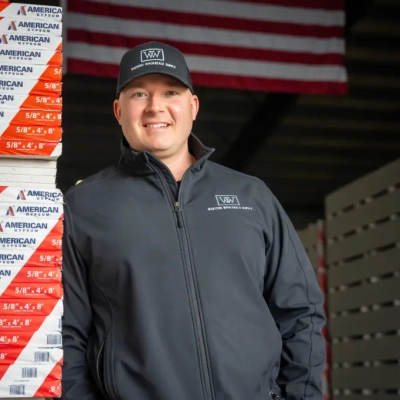 Jake BeanPresident & Co-Owner, Western Wholesale Supply
My background as a Navy helicopter pilot taught me the critical importance of meticulous planning and precise execution in complex, long-term operations. In construction distribution, this translates to breaking down large projects into clear, achievable material milestones.
A simple, yet powerful, artifact we use is a detailed material delivery schedule, built directly from precise material estimates. We leverage tools like the USG Sheetrock Estimator to define exact quantities for materials such as drywall, steel framing, or insulation.
This schedule transforms the abstract project into tangible, delivered materials at each phase, providing an immediate visual of progress. Seeing the correct components arrive on time and as specified for installation serves as a concrete, rewarding milestone for the entire team.
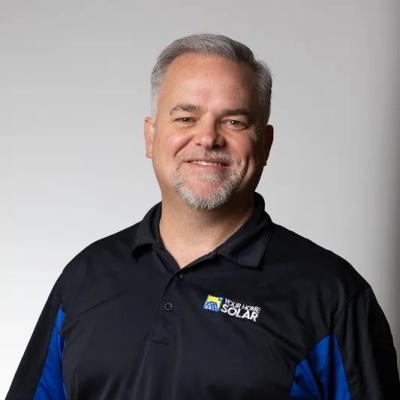 Ernie BussellCEO, Your Home Solar
My diverse career, from intricate Navy operations to scaling a fast-growing solar company, has taught me that sustained motivation hinges on clearly seeing forward movement. Especially with long projects like a multi-month solar installation, clarity on where we are versus where we're going is paramount.
We make progress visible by meticulously tracking every single phase of a project, from initial design and permitting to final utility approval. This allows us to share real-time updates internally and with customers, which was especially crucial when I oversaw the development of a company-wide scheduling matrix for a $40 million operation.
A simple, yet powerful, ritual that makes effort feel rewarding sooner is our payment structure. Unlike many in the industry, our company does not receive its final payment until a job has been fully inspected, commissioned, and turned on. This ensures our entire team is motivated to push for complete system functionality, rather than just getting "glass on the roof" to hit a partial milestone.
Running a property management company means you're constantly in the weeds--chasing maintenance tickets, filling vacancies, coordinating contractors. The "messy middle" is basically our default state.
One thing that genuinely helped us was turning our 48-hour maintenance response commitment into a visible scoreboard. Every time we close a ticket inside that window, it's a concrete win the whole team can point to--not some abstract quarterly goal. Small, fast wins compound into team confidence.
The artifact that made the biggest difference for us was our occupancy rate, tracked in real time. When you can look at a number like 98% occupancy and connect it directly to the calls you made, the listings you wrote, the tenant you screened carefully last month--effort stops feeling invisible. The result is right there.
My honest advice: pick one metric that your team actually controls day-to-day, not a lagging revenue number. Make it visible, make it update frequently, and let the team own it. That ownership is what keeps people motivated when the project still has months to go.
 Runbo LiCEO, Magic Hour AI
I'm Runbo Li, Co-founder & CEO at Magic Hour.
The messy middle kills more projects than bad ideas ever will. The fix isn't motivational speeches or OKR dashboards. It's making the work undeniable by shrinking the distance between effort and evidence.
We have a ritual at Magic Hour that I call "the daily ship log." Every single day, David and I post what we shipped into a shared channel. Not what we worked on. Not what we're planning. What went live. It can be a bug fix, a new template, an infrastructure tweak, a partnership email that landed. The rule is simple: if you can't point to something that exists in the world today that didn't exist yesterday, you have to ask yourself why.
This sounds almost too basic, but that's the point. When you're two people building a platform used by millions, the scope of what still needs doing can feel paralyzing. There were stretches during our Y Combinator batch where we were shipping features at 2 AM, debugging GPU infrastructure at 6 AM, and doing user calls by 9 AM. Without the ship log, those weeks would have blurred into one exhausting fog. Instead, we'd scroll back through a week of entries and see fifteen, twenty tangible things that now existed. That's not a feeling. That's proof.
The psychological mechanism is real. Progress on meaningful work is the single strongest driver of motivation. Not recognition, not compensation, not perks. Teresa Amabile's research at Harvard nailed this years ago. But most teams bury progress under layers of project management abstraction. Tickets move across a board and nobody feels anything.
What the ship log does is collapse abstraction. You're not 37% through a sprint. You built the thing that lets a small business owner in Texas turn a product photo into a video ad in 90 seconds. That specificity matters. It connects effort to impact in a way that a progress bar never will.
One more thing: the log has to be public to your team, even if your team is two people. Accountability changes the texture of the work. You stop letting yourself hide behind "I was heads down on something big." Big things are made of small shipped pieces, and the log forces you to prove it daily.
Motivation doesn't come from seeing the finish line. It comes from looking back and realizing you've been running the whole time.
 Erik SmithOwner, Quad County Roofing
Running roofing projects means your crew can go days tearing off old material, dealing with decking issues, and waiting on deliveries before anything looks finished from the outside. That messy middle is where motivation dies if you let it.
The artifact that changed things for us was a simple job board photo log -- before and after shots at each stage, pinned in sequence. Not for the client, for the crew. When someone can physically point to the decking they repaired or the underlayment they laid perfectly, that work stops being invisible. It becomes a story the team told together.
The ritual that made the biggest difference was a quick tailgate huddle at job completion, where I'd call out one specific thing a crew member did right on that project. Not generic praise -- something like "you caught that soft spot near the ridge that would've caused a callback six months from now." That kind of recognition connects effort directly to outcome, and it sticks.
In this industry the finished roof looks the same to most homeowners whether it was done carefully or carelessly. Making the invisible craftsmanship visible -- to your own team -- is what keeps standards high and people invested when the job is still half-done.
 Hannah SnowDirector of Operations, Middletown Self Storage
I run day-to-day operations across Middletown Self Storage's two Middletown locations, so a lot of my job is keeping a long list of moving parts visible enough that the team feels momentum before the whole project is "done." In operations, the messy middle is where motivation disappears if everything still just feels unfinished.
The simplest artifact that's worked for me is a "ready today / next up / waiting on" board. Not a big project plan -- just a brutally clear visual split between what is fully customer-ready now, what's actively being worked, and what's blocked.
That matters because in storage, progress is often invisible until the whole experience is polished: units cleaned, packing supplies stocked, access working smoothly, climate-controlled spaces checked, move-ins coordinated. When the team can move something from "next up" to "ready today," effort feels real immediately, even if the larger initiative across both locations is still ongoing.
The ritual is a 5-minute end-of-day reset where we physically move items and name one thing that became easier for the customer because of that work. Tying progress to customer convenience -- cleaner units, smoother access, faster move-ins, better prep for boat/RV/vehicle parking, or getting supplies in place -- makes the work feel rewarding sooner than waiting for the whole project to wrap.
 Matt WalzPresident, Walz Scale & Scanner
Leading Walz Scale through the transition from a local dealership to a global developer of 3D volumetric scanners taught me that technical R&D can feel like a black hole. I keep our team grounded by focusing on the transition from abstract code to physical, "Legal-for-Trade" reality.
When we pioneered our load scanning technology, the "messy middle" was the long gap between writing software and seeing a mining truck rendered in 3D. We bridged this by setting up a "Live Bench" in the office where every small update physically moves a scanner head or triggers a scale, making digital progress visible in real-time.
Our most rewarding ritual is the "Calibration Signature" on our internal NTEP-readiness logs. Before any new prototype or industrial system leaves for field testing, every team member signs the physical calibration report to claim ownership of that unit's accuracy.
Seeing your name next to a "Passed" certification status makes the grind of engineering feel like a tangible contribution to the global supply chain. It transforms a routine technical requirement into a shared finish line that proves the work is ready for the real world.
 Rob DietzOwner & President, Dietz Group
With 18+ years managing long-term digital marketing projects like SEO--which often takes 6-18 months to hit top Google spots--I've kept teams motivated by visualizing incremental wins early.
One simple artifact: a monthly ranking report from tools like BrightLocal, tracking positions for target keywords and metrics like searches, calls, and bookings on Google Business Profiles.
We review it in quick 15-minute team huddles, celebrating small climbs (e.g., from page 2 to page 1) alongside immediate Google Ads leads, proving effort pays off sooner.
This ritual turned a law firm's GBP optimization into visible 50% lead growth mid-project, sustaining momentum through the grind.
 Stephanie ÖzcanCo-Founder, Managing Partner, Ferah Hospitality Group
My 13 years in strategic communications and directly opening three restaurants have shown me the importance of clear progress in long projects. It's vital to sustain team motivation through the entire "messy middle."
For long-term projects like a new restaurant opening, the interior design is a powerful visible artifact. As I craft each Ferah restaurant's ambiance, seeing the space evolve provides immediate, tangible progress for the entire team, making the vision feel real.
In our catering business, the custom menu tasting is the ritual that makes effort rewarding sooner. Presenting a custom menu and seeing a client's excitement at a tasting directly validates the planning and creativity, fueling our team for the main event.
I've spent 30+ years designing, auditing, and maintaining irrigation systems across residential, commercial, and municipal properties, and the only way to survive a long project is to make invisible progress visible before the final install. In my world, waiting until "it's done" kills momentum.
The simplest artifact I use is a living site record: a running blueprint markup plus a punch list that shows what was diagnosed, what was corrected, what still needs approval, and what gets monitored next. We do this in seasonal maintenance too--start-up diagnostics, repair recommendations, and detailed records for future reference--because people feel progress when they can literally see fewer unknowns on the page.
One ritual that helps is the mid-project walk-through around exceptions, not tasks. Instead of saying "we installed hardware," we ask: what leak was ruled out, what controller was reprogrammed, what zone now has the right coverage, what old system piece was eliminated, what decision got easier because of today's work.
That matters a lot on smart irrigation jobs, where the "messy middle" is mostly calibration, testing, and adjustment. When flow data, weather inputs, controller settings, and field observations start matching the plan, that's a real win--so I call that out early and often, because clarity is motivating long before the whole landscape looks finished.
 Mrityunjaya PrajapatiFounder & Architect, Skill Passport
Track Visible Wins, Not Just Final Outcomes
In long projects, motivation drops because progress is invisible. People feel like they're working, but nothing feels "done." So instead of tracking only final deliverables, I focus on making progress visible in small, finished units.
The simplest thing that worked for us was introducing a "Weekly Wins Board." Every Friday, each team member adds 2-3 completed outcomes-not tasks in progress, only things that are done and usable.
Not "worked on landing page," but
"Landing page hero section finalized and live."
Not "SEO improvements started," but
"Fixed 15 broken internal links + improved crawl errors."
This small shift changed how the team experienced work. Instead of waiting weeks or months for a big launch, people saw tangible progress every few days. It created a sense of completion even in the middle of messy execution.
One example: during a multi-site SEO and automation project, progress felt slow because results were long-term. After implementing the wins board, we realized we were completing dozens of meaningful improvements weekly—technical fixes, content updates, and automation steps. That visibility alone improved team morale and consistency.
As a founder, it also gave me a clearer signal. Instead of asking, "are we on track?", I could see actual output building week by week.
Why it works:
Key takeaway:
Don't wait for big milestones to feel progress. Create a system where small completions are visible, shared, and acknowledged. Momentum isn't built at the end - it's built in the middle.