

The 5% You See, the 95% You Don't
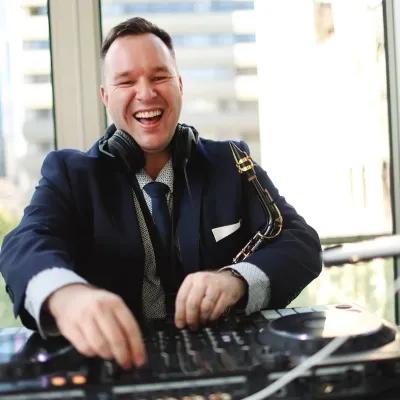
Last weekend at a Canberra wedding, the bride's father pulled me aside around 9:30pm. The dance floor was packed. Aunties were doing the conga. Two groomsmen had their ties around their heads. He smiled, shook my hand, and said something I hear most weekends: "Mate, you make it look easy."
Now, he meant it as a compliment. But every working performer knows what that sentence really means. The five hours he saw that night sat on top of forty hours of work he didn't. Song selection. An MC script written to the couple's quirks. Equipment checks at 2pm. Reading the room from the moment guests walked in. A split-second call to skip the planned slow song, because Grandma had just made it onto the floor and one wrong track would have cleared it.
So when I read modern productivity advice, I find most of it strange. Often it sells a fantasy of optimisation, of hacking your way to more output through better apps and harder mornings. But twenty-plus years of gigging has taught me the opposite. The visible 5% of any good performance only exists because of patient, unglamorous work that nobody applauds. And nobody is going to clap for a Tuesday afternoon spent re-tagging a song library either.
The wedding industry is hustle culture in a tuxedo
Here's the part that surprises people. The wedding industry is one of the most hustle-poisoned environments I've worked in. Couples cry over Pinterest boards at 11pm on a Wednesday. Meanwhile, vendors flog themselves through twelve weddings a season and burn out by autumn. Every supplier I know has a colleague who quit the industry and took a council job for the silence.
So working inside that pressure cooker has forced me to do the opposite. Slow down. Take fewer gigs but prepare them properly. Say no when something doesn't fit, even when the cheque looks tempting. Cal Newport calls this "slow productivity" in his 2024 book, and a million people bought it because the idea sounded radical. But working musicians have been doing it for centuries. We just call it craft.
After two decades, here's what I'm sure of. The single biggest lever in this work isn't a tool, a routine, or a hack. Instead, it's the willingness to do less, more carefully. One client meeting prepared with full attention beats five rushed ones. And one playlist built around the actual couple beats a generic banger pack you've used at thirty other receptions.
Constraints aren't your enemy
The other thing twenty years behind the decks has shown me is that constraints are where the good work lives. Every wedding comes with a wall of rules. No explicit lyrics during dinner. The first dance song is non-negotiable. The bouquet toss has a four-minute window. The bride's mum has requested ABBA, but the groom hates it. And the reception ends at midnight sharp.
A younger me used to grumble about all this. Now I see those constraints are exactly what makes a wedding set creative. Stravinsky said something close to a hundred years ago: the more constraints you impose, the more freedom you find inside them. He was talking about composition. But the same thing applies to a Saturday-night dance floor in Yarralumla.
When I sit down to plan a set, the boundaries are what make the puzzle interesting. Without them, I'd drown in infinite possibility. With them, the work becomes a series of clear, solvable problems. Which song lands the after-dinner pivot? Which key bridges the live sax solo into the next track? What's the safety song if energy drops at 10:15? So constraints aren't blocking the creativity. They're scaffolding it.
And this applies way beyond the booth. Most people fail at productivity not because they lack tools but because they lack edges. Their week is a soft puddle of possibilities. So they panic, work too long, and end up exhausted with little to show. Define the edges. Then pick the few things that genuinely matter. After that, attack those with everything you have.
The dance floor doesn't lie
Here's one last lesson I'd offer anyone running a creative business or trying to do better work. Stop watching the scoreboard. Watch the next eight bars.
When I'm at a gig and the floor is half-full and a song isn't quite landing, the worst thing I can do is panic about the room as a whole. The minute my head goes there, my hands fumble. Then I miss the pickup point. I lose the read on which corner of the room is about to turn. So I've trained myself to do the opposite. Process, not outcome. Just play the next 30 seconds well. Then the next 30. Soon enough the floor fills up, or it doesn't. Either way, I've done my job.
That principle has saved my business too. Don't obsess over the five-year plan. Skip the Yelp refresh. Stop doom-scrolling your competitors. Just show up to Tuesday's prep with full attention. Then reply to that enquiry properly. Soundcheck before the band arrives. The cumulative weight of small things done well is what builds a career.
So twenty years in, here's the most contrarian thing I can tell you. There is no hack. There is only patient work, sensible constraints, and the discipline to keep showing up when nobody is watching. The dance floor at 9:30pm is the visible 5%. The rest is the job. And the rest is where it's quietly decided.